"Hello, Mr PENIS HAVER!"
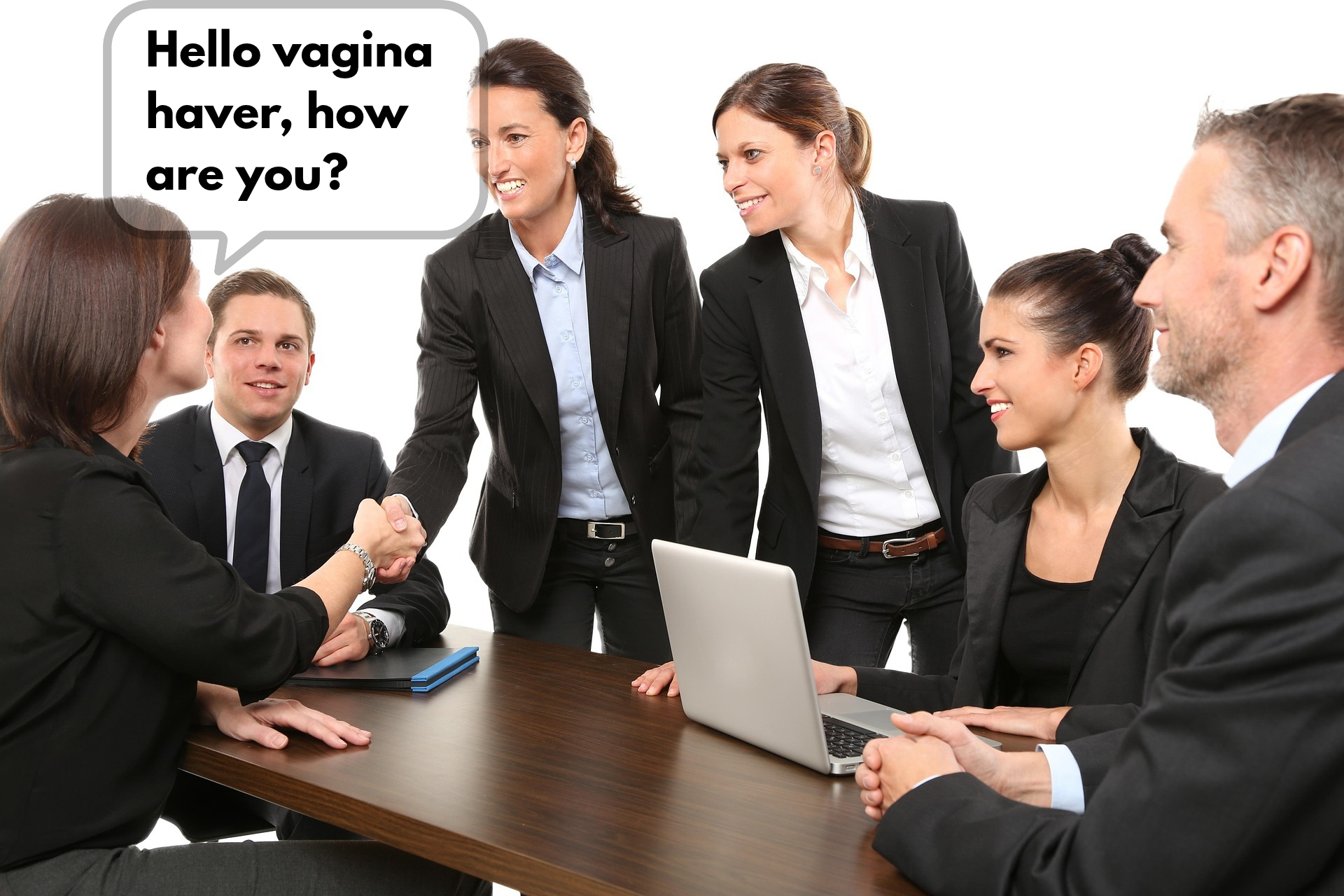
Imagine walking up to someone at a party and opening with: “Hi, you vagina-haver!” You wouldn’t do that. Not because it’s untrue of some people, but because it’s a strange way to greet a person — reducing them to an anatomical inventory before you’ve said anything about who they are. Nobody does this. Except, increasingly, the BBC, and only for one category of person.
Over the past couple of years, BBC News has developed a habit of introducing trans women as “biological males who identify as women,” and trans men as the reverse. Former BBC journalist Paul Ilett — a gay man, not himself trans, and no longer employed by the corporation — put it plainly:
“Why is BBC News increasingly describing trans women as ‘biological males’ who identify as women? I’ve also seen it use the reverse wording for trans men. This is gender critical language 101.”
Ponder this. Cis people in BBC copy are “a woman,” “a nurse,” “a mum of two.” Nobody gets introduced as “a person with a Y chromosome who works as a nurse.” Only trans people get the anatomical preface — as though “trans woman,” a phrase that did the job perfectly well for years, had suddenly stopped communicating anything. As Ilett notes, “we’ve had decades of stories about trans people without the need for any other language than ’trans woman’ or ’trans man’.” So what changed?
The BBC’s defence is audience research showing people find trans terminology confusing. Ilett asked to see it. The answer is worth dwelling on: the BBC “declined to release it, saying that any such records, if held, would fall outside the Act because they would be held for journalistic purposes. It also said it hadn’t searched for them.” A broadcaster citing research to justify a stylistic choice, while declining to let the public — who fund it through the licence fee — confirm that research exists at all, is not a good look.
Ilett didn’t stop at the FOI. He built his own dataset: he “collected 1,011 potentially relevant BBC News text pages dated between January 2020 and October 2026,” then read a sample closely to check whose voices actually made it into the stories. The results are the real headline: of 42 pages read closely, “just 13 directly quoted someone identified as trans or non-binary,” while “thirteen included a contribution from a gender-critical person or group, and 10 of those 13 didn’t directly quote anyone identified as trans or non-binary.” Trans people are the subject of the story more often than they’re a voice in it.
The pattern gets sharper around risk. Ilett flags a Darlington employment tribunal report that “opened with ’expert’ testimony about women’s fear of male violence in a dispute involving a trans colleague,” even though, as he points out, “the testimony didn’t establish that this colleague posed a risk, but the opening invited readers to make that connection.” Nothing stated is technically false — but the framing does the work of suggestion anyway.
It’s worth saying the BBC can do this well when it tries. Ilett points to its NHS Fife coverage, which “quoted Scottish Trans on why staff feared being outed,” and another report that “led with trans doctor Beth Upton’s own words.” That it’s possible proves the “biological male” framing isn’t a neutral journalistic necessity. It’s a choice, applied unevenly.
Ilett situates this inside a wider pattern of the BBC fraying trust with LGBTQ+ audiences — the cancellation of I Kissed a Boy/I Kissed a Girl, the blurring of Bethany Antonia’s “Protect the Dolls” T-shirt on Strictly, Pride badges reportedly removed from University Challenge contestants.
These outlets should know better. There’s a particular flatness to it — being rendered, by the national broadcaster, as a set of chromosomes with opinions attached. It doesn’t read as precision. It reads as a tell: the writer wanted you to picture the body before the person.
Ilett, who spent part of his career inside this institution, lands on the same conclusion: BBC News should be “showing us the research it relies on, challenging claims about risk, and giving trans people more room to speak for themselves,” and it “needs to stop relying on gender-critical tropes as the basis for its news coverage.”
No one greets a stranger saying, “Hi, you vagina-haver.”, because it isn’t actually informative — it’s a provocation dressed as a fact. If the BBC wants to keep introducing trans people by their anatomy, the least it can do is show its workings.
Show us the research.
Full piece by Paul Ilett: paulilett.co.uk/blog/bbc-news-trans-coverage


Comments